Conversion Certificate and DC-Converted Land Explained 2026
Published 21 Jul 2026 · Last updated 21 Jul 2026
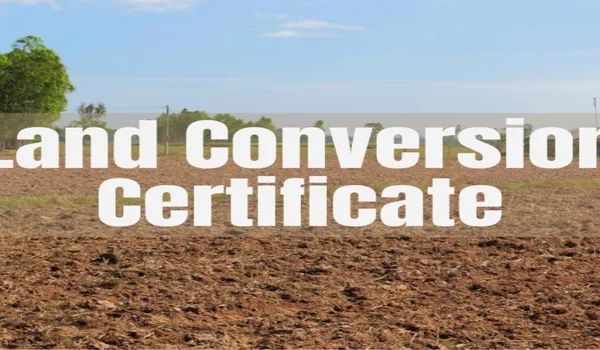
Most land around Bengaluru started life as farmland. Before a home can legally stand on it, that land has to be converted from agricultural to non-agricultural use, and the paper that records this is the conversion certificate. Buyers hear plot sellers and agents throw around phrases like "DC converted" and "NA land" without ever explaining what they mean or why they should care. If you are buying a plot, a villa or an apartment on Bannerghatta Road or anywhere in Bengaluru in 2026, this guide explains what land conversion is, what the conversion certificate proves, why it matters, and how to check it.
What Land Conversion Means
In Karnataka, land is recorded by its use, and most of it is classified as agricultural. Agricultural land is meant for farming, not for houses, so building a home on it without permission is irregular. Conversion is the official process of changing that recorded use from agricultural to non-agricultural, most often to residential, but sometimes to commercial or industrial. Once done, the land is described as converted, non-agricultural, or NA land.
The permission comes from the revenue authorities, historically an order signed by the Deputy Commissioner, which is why people call it DC conversion or a DC-converted plot. The order fixes the survey number, the extent of land, and the exact purpose it may now be used for.
What the Conversion Certificate Proves
The conversion certificate, or conversion order, is the document that records this change of use. It sets out the survey number and village, the extent converted, the purpose allowed, and any conditions attached, such as fees paid and the use beginning within a fixed time. It is your proof that the land is legally cleared to be built on.
One thing it does not prove is who owns the land. A conversion order confirms the permitted use only; ownership is a separate question answered by the registered title deed and a clean chain of title, which our title deed and mother deed guide explains. Converted land with a defective title is still a bad buy.
Converted vs Unconverted Land at a Glance
The practical gap between converted and unconverted land is wide, and it shows up at every step of a purchase:
| Aspect | Converted (NA) land | Unconverted (agricultural) land |
|---|---|---|
| Legal use | Approved for residential or other non-agricultural use | Meant for farming only |
| Khata | Eligible for a valid A-khata | No proper khata, or a flagged B-khata |
| Plan sanction | Building plan can be sanctioned | No plan sanction for a house |
| Home loan | Banks generally lend | Most banks decline |
| Resale | Wide buyer pool, cleaner sale | Few buyers, priced down for risk |
| Risk | Low on the land-use count | Penalty, regularisation or demolition risk |
Indicative comparison. The exact position depends on the specific land, its records and the local authority.
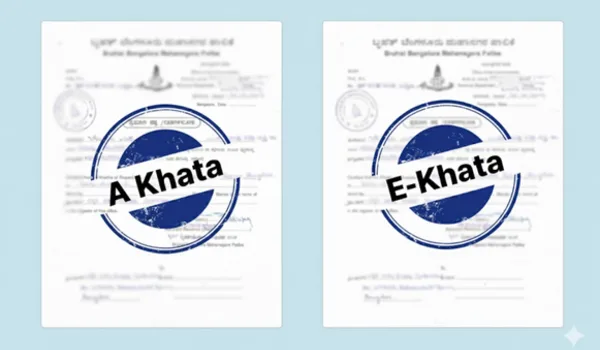
The khata link is the one buyers meet first: authorities issue a clean A-khata only for converted land, as our khata, A-khata and e-khata guide sets out.
Why It Matters to You
Buying a home on unconverted land is not a paperwork technicality you can fix later. Without conversion you may be unable to get a valid khata, a sanctioned plan, or a home loan, and any structure raised on it can attract penalties or, in the worst case, action for unauthorised use. When you come to sell, informed buyers and their lawyers will spot the gap and either walk away or push the price down.
For a plot purchase, conversion is something you verify directly. For an apartment or a large villa project, the developer normally holds the conversion for the whole project land, but you should still confirm it rather than take it on trust, along with the rest of your home-buying document checks.
How to Check Land Conversion
Checking conversion is mostly a matter of asking for the right paper and matching it against the other records:
- Get the conversion order: ask the seller or developer for a copy of the conversion certificate or DC order.
- Match the survey number and extent: the numbers on the order must match the sale deed, the RTC and the mutation records.
- Read the purpose: confirm it is converted for residential use, not merely commercial or industrial.
- Check the conditions: see that fees were paid and any time limit to begin the use was met.
- Verify with the record: have a lawyer confirm the order against the revenue records and the title before you pay any advance.
Karnataka has been moving conversion onto an online, more automatic footing in recent years, so the exact route and terminology can change. Confirm the current process and the status of your specific land with a property lawyer or the local tahsildar rather than relying on a seller's word.
Conversion and the Approvals That Follow
Conversion is the first approval in a chain, not the last. Once land is converted, the layout or building still needs a sanctioned plan, and any construction must follow it. Our guides on the sanctioned building plan and deviations and on the builder-buyer agreement cover the approvals and the contract that sit on top of a converted, clean-title piece of land.
Land Conversion at Birla Bannerghatta

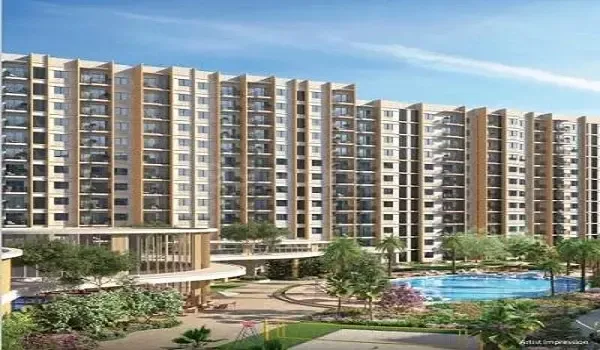
Birla Bannerghatta is a 50-acre gated township by Birla Estates at Begur. In a large, approved development like this, the conversion of the project land is normally handled by the developer as part of getting the plan sanctioned and the project registered. As a buyer you are not converting land yourself, but you are entitled to confirm that the land your home sits on is converted for residential use, so ask to see that the project land is DC converted when you book.
- Builder: Birla Estates (Aditya Birla Group)
- Location: Begur, Begur Hobli, Bannerghatta Road
- Configs: 1, 2, 3, 3.5 BHK + duplex/villa formats
- Starting price: ~₹75 L (indicative; base ~₹12,500 / sq ft)
- Status: Pre-launch · possession early 2031 · K-RERA expected Mar 2027
See the price list and the floor plans to fix the home you are buying, and keep the conversion status on your list of documents to confirm.
Frequently Asked Questions
1. What is a conversion certificate?
It is the order, usually from the Deputy Commissioner, that converts land use from agricultural to non-agricultural so a home can legally be built on it.
2. What is DC-converted land?
It is agricultural land that has been officially converted to non-agricultural use for residential, commercial or industrial purpose through a conversion order.
3. Why does land conversion matter to a buyer?
Building on unconverted agricultural land is irregular, so it is hard to get a valid khata, a plan sanction, a home loan or a clean resale.
4. How do I check if land is converted?
Ask for the conversion order and match its survey number and extent with the sale deed and RTC; confirm the details with a lawyer or the tahsildar.
5. Is a conversion certificate proof of ownership?
No, it only confirms the permitted land use; ownership is proved by the registered title deed and a clean chain of title.
6. Do apartment buyers need to check conversion?
Yes, confirm the whole project land is converted; in a large approved project the developer usually holds the conversion, but you should still verify it.
Conclusion
Land conversion is the difference between a home you can register, finance and resell without trouble and one that carries a permanent question mark. The conversion certificate proves the land is legally cleared for a house, but it is only one of several checks, and it says nothing about who owns the land. Ask for the DC conversion order, match its survey number and extent against the deed and the revenue records, confirm it allows residential use, and have a lawyer verify it before you part with any money. Get that right and the rest of your due diligence stands on solid ground.
Buying on Bannerghatta Road? Review the price list and the floor plans for Birla Bannerghatta at Begur, and keep the land-conversion status on your document checklist.
Birla Bannerghatta Blog