TDS on Property Purchase Explained 2026
Published 10 Jul 2026 · Last updated 10 Jul 2026
When you buy a property in India for ₹50 lakh or more, you as the buyer must deduct 1% of the price as TDS and deposit it with the government, under Section 194-IA of the Income Tax Act. It is the buyer's job, not the seller's, and missing it invites interest and a fee. If you are buying an apartment on Bannerghatta Road or elsewhere in Bengaluru in 2026, this guide explains when the 1% applies, how to pay it through Form 26QB, and the joint-buyer, no-PAN and NRI-seller cases that trip people up.
Given that most apartments in the city now cross the ₹50 lakh mark, this is a step almost every buyer has to handle at registration, so it pays to understand it before you sign.
TDS on Property Purchase 2026: Quick Reference
| Item | What applies (indicative) |
|---|---|
| Governing section | Section 194-IA (resident seller) |
| Rate | 1% of the sale consideration |
| Threshold | Consideration of ₹50,00,000 or more |
| Deducted on | Full consideration once it reaches ₹50 lakh, not only the excess |
| Who deducts | The buyer |
| How to pay | Form 26QB (challan-cum-statement); PAN, no TAN needed |
| Certificate to seller | Form 16B |
| Seller without PAN | TDS at 20% |
| NRI seller | Section 195, not 194-IA (higher, on capital gains) |
Rates and thresholds indicative for 2026; confirm the current position on the income tax portal or with a chartered accountant before you deduct.
When the 1% TDS Applies
Section 194-IA covers the sale of immovable property, land or building other than agricultural land, by a resident seller. Three conditions decide whether you deduct:
- Value: the sale consideration is ₹50 lakh or more. Below that, no TDS is required under this section.
- Whole amount: once you cross ₹50 lakh, the 1% is on the entire consideration. A flat priced at ₹80 lakh attracts 1% on the full ₹80 lakh, that is ₹80,000, not 1% of the ₹30 lakh above the threshold.
- Higher of two values: the rule now looks at the sale consideration or the stamp duty (guidance) value, whichever is higher. If the guidance value is above your agreed price, the 1% is worked out on that higher figure.
The tax is deducted at the time of payment or credit, whichever is earlier. If you are paying an under-construction home in instalments, you deduct 1% on each instalment as it is paid, not in one lump sum at the end.
How to Deduct and Deposit It: Form 26QB
The process is deliberately simple, and unlike business TDS it does not need a TAN. In short:
- Deduct at payment: hold back 1% from the amount you pay the seller and pass on the remaining 99%.
- File Form 26QB: this is the combined challan and statement. You enter both PANs, the property details, the consideration and the tax, then pay online.
- Meet the deadline: deposit through Form 26QB within 30 days from the end of the month in which you deducted. A missed deadline draws interest plus a late-filing fee.
- Issue Form 16B: after the payment is processed, download Form 16B from the TRACES portal and give it to the seller as proof that the TDS was deposited against their PAN.
Because the 1% is part of the total you owe, budget it alongside your other closing costs. It sits next to your stamp duty and registration and, on an under-construction home, the GST, none of which your home loan covers.
Joint Buyers, Joint Sellers and Instalments
Real purchases are rarely one-to-one, so a few situations need care:
- Joint buyers: the ₹50 lakh test is on the property value, not per buyer. If two of you buy a ₹90 lakh flat together, TDS still applies, and each buyer files a separate Form 26QB for their share of the payment.
- Joint sellers: similarly, where there is more than one seller, the buyer files a 26QB for each seller in proportion to what each receives.
- Instalments: deduct 1% on every instalment. Each deposit follows the same 30-day rule from the end of that instalment's month.
If you are buying jointly using a shared loan, read our joint home loan guide too, since the ownership split you fix there also decides how you divide the TDS and the tax benefits.
Two Cases That Change the Rate
Most resident-to-resident deals are a clean 1%, but two situations are different and worth flagging early:
- Seller has no PAN: if a resident seller cannot provide a valid PAN, TDS is deducted at 20% instead of 1%. Always collect and verify the seller's PAN before you pay.
- Seller is an NRI: this is not a Section 194-IA case at all. It falls under Section 195, where TDS is on the seller's capital gain at higher rates, plus surcharge and cess, and the buyer usually needs a TAN. The maths is very different, so do not apply the flat 1% here; take advice from a chartered accountant.
Buying a Pre-launch Home at Birla Bannerghatta
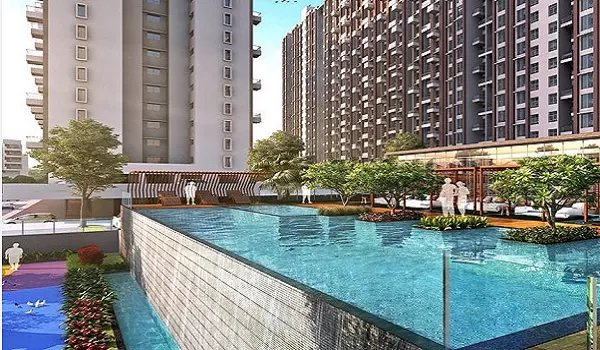
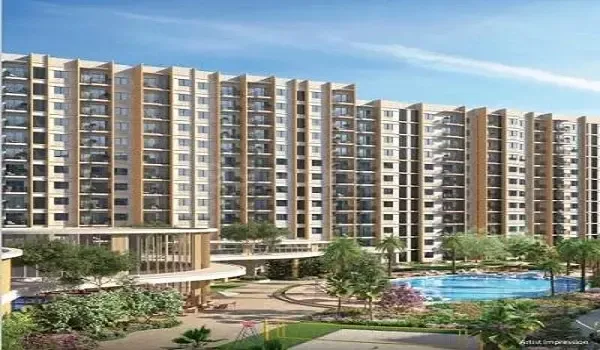
Birla Bannerghatta is a 50-acre gated township by Birla Estates at Begur, where apartments comfortably clear the ₹50 lakh threshold, so the 1% TDS will apply. As a pre-launch home the price is paid in tranches, so plan to deduct 1% on each instalment and file a Form 26QB for each, rather than once at the end. Keep every Form 16B safely, since the seller and your own records both rely on it.
- Builder: Birla Estates (Aditya Birla Group)
- Location: Begur, Begur Hobli, Bannerghatta Road
- Configs: 1, 2, 3, 3.5 BHK + duplex/villa formats
- Starting price: ~₹75 L (indicative; base ~₹12,500 / sq ft)
- Status: Pre-launch · possession early 2031 · K-RERA expected Mar 2027
See the price list and the floor plans to work out the consideration, and therefore the TDS, on the configuration you want.
Frequently Asked Questions
1. When does 1% TDS apply on a property purchase?
When you buy immovable property, other than agricultural land, from a resident and the consideration is ₹50 lakh or more. The buyer deducts 1% under Section 194-IA.
2. Is TDS only on the amount above ₹50 lakh?
No. Once the consideration reaches ₹50 lakh, the 1% is deducted on the full amount, not only the part above ₹50 lakh.
3. Who deducts and deposits the TDS?
The buyer. You deduct 1% from the payment to the seller and deposit it through Form 26QB, then issue Form 16B to the seller.
4. By when must the TDS be paid?
Through Form 26QB within 30 days from the end of the month in which the deduction is made. Late payment attracts interest and a fee. Confirm the current rule on the income tax portal.
5. Do I need a TAN to deduct this TDS?
No. For a Section 194-IA property purchase the buyer uses PAN, not a TAN. Both buyer and seller PAN are entered in Form 26QB.
6. Is the rule different if the seller is an NRI?
Yes. An NRI seller falls under Section 195, not 194-IA, with TDS on capital gains at higher rates and usually a TAN required. Take advice from a chartered accountant.
Conclusion
TDS on a property purchase is one of the easier obligations to get right, as long as you remember that it is your responsibility as the buyer. Deduct 1% the moment the price touches ₹50 lakh, work it on the higher of the agreed price and the guidance value, deposit it through Form 26QB within the deadline, and hand the seller their Form 16B. Watch the two exceptions, a resident seller without a PAN and any NRI seller, and when either comes up, or the numbers are large, run it past a chartered accountant before you pay.
Buying on Bannerghatta Road? Review the price list and the floor plans for Birla Bannerghatta at Begur, then budget the TDS along with your other closing costs.
Birla Bannerghatta Blog