CIBIL Score and Home Loan Eligibility Explained 2026
Published 18 Jul 2026 · Last updated 18 Jul 2026
Before a lender looks at the flat you want, it looks at you. Your credit score is the first gate a home loan passes through, and it quietly shapes not just whether you are approved but how much you get and at what rate. Many buyers only check it when the application stalls, by which point it is too late to fix. If you are planning to buy an apartment on Bannerghatta Road or anywhere in Bengaluru in 2026, this guide explains what the CIBIL score is, how it feeds home loan eligibility, the factors that sit beyond the score, and how to strengthen yours before you apply.
What the CIBIL Score Is
A credit score is a three-digit number, running from 300 to 900, that sums up how you have handled borrowing so far. CIBIL is one of the licensed credit bureaus in India, and its score is the one most people name, though lenders may read any bureau's report. The higher the number, the lower the risk you look to a lender. The score is built from your credit history: loans and cards you hold, whether you pay on time, how much of your limit you use, and how long your record runs.
It is not a fixed label. The score moves as your behaviour changes, so a patchy past can be repaired and a strong record can slip with a few missed payments. What lenders want to see is a steady, unremarkable habit of paying on time.
Why It Matters for a Home Loan
A home loan is large and long, so the lender leans harder on your score than it would for a small purchase. A strong score does three things:
- Approval: it clears the first filter, so the application moves forward instead of stalling.
- Interest rate: many lenders now price the loan partly on the score, so a higher score can earn a better rate, which over a long tenure is real money.
- How much: a clean record supports the full eligible amount, while a weak one may mean a smaller sanction or a demand for a co-applicant.
The rate impact is meaningful but not something to quote as a fixed figure, since every lender sets its own grid; compare current offers rather than assume a number.
Score Bands at a Glance
Lenders set their own cutoffs, but the broad reading of a score is fairly consistent:
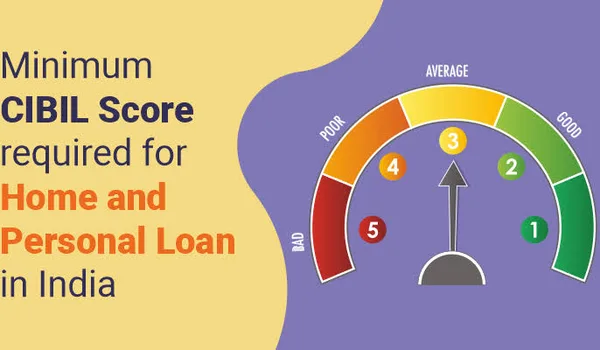
| Score band | How lenders tend to read it | Likely effect on a home loan |
|---|---|---|
| 750–900 | Strong track record | Smoother approval, best chance of a good rate |
| 700–749 | Good, generally acceptable | Usually approved, rate may be a shade higher |
| 650–699 | Fair, some caution | Possible, may face a higher rate or conditions |
| Below 650 | Weak or thin history | Harder, may need a co-applicant or a bigger margin |
| NA / NH | No or too little history | Assessed case by case; build a record first |
Bands are indicative; each lender sets its own cutoff and rate grid. Confirm the current requirement with your lender.
What Goes Into the Score
- Repayment history: the biggest factor. Paying every EMI and card bill on time builds the score; missed or late payments pull it down and linger.
- Credit utilisation: how much of your card limit you use. Keeping balances well below the limit reads as disciplined; running cards near the limit hurts.
- Length of history: a longer, older record gives more to judge, which is why closing your oldest card can backfire.
- Credit mix: a healthy blend of secured and unsecured credit, handled well, reads better than only one kind.
- New enquiries: several loan or card applications in a short span look like credit hunger and can dip the score.
Eligibility Is More Than the Score
The score gets you through the door; the rest of the file decides the loan. Lenders weigh several things alongside it:
- Income and stability: a steady salary or business income, and how long you have held it, anchor how much you can borrow.
- FOIR: the share of your income already going to EMIs. Lenders cap total EMIs at a portion of take-home pay, so existing loans shrink the new one.
- Age and tenure: your age sets how long the loan can run, which affects the EMI and the eligible amount.
- The property: a clean title and a satisfactory technical and legal check matter as much as your profile; a problem here can stall an otherwise strong application.
Our home loan guide works through eligibility, FOIR and the loan-to-value ratio in detail, and a joint home loan with a co-applicant who has a good score can lift both the eligibility and the profile.
How to Strengthen Your Score Before Applying
- Check early: pull your free report a few months ahead so there is time to act on what you find.
- Pay on time, every time: set reminders or auto-pay so no EMI or card bill slips; this is the single biggest lever.
- Lower your utilisation: pay down card balances so you are using a small share of the limit when the lender checks.
- Hold back on new credit: avoid fresh loans and card applications in the run-up to your home loan.
- Dispute errors: a wrong entry, a loan you closed still showing open, can drag the score; raise it with the bureau to correct it.
Repairs take time to reflect, so the earlier you start the better. If your rate already feels high on an existing loan, our balance transfer guide covers when switching lenders is worth it.
Where the Score Fits When You Buy at Birla Bannerghatta

Birla Bannerghatta is a 50-acre gated township by Birla Estates at Begur. On a pre-launch purchase the payment is staggered against construction, which gives you time between booking and the bulk of the loan to tidy up your score and line up the loan cleanly. Check your report before you book, keep the EMIs you already run comfortable, and confirm your eligibility with a lender against the unit and price you have in mind.
- Builder: Birla Estates (Aditya Birla Group)
- Location: Begur, Begur Hobli, Bannerghatta Road
- Configs: 1, 2, 3, 3.5 BHK + duplex/villa formats
- Starting price: ~₹75 L (indicative; base ~₹12,500 / sq ft)
- Status: Pre-launch · possession early 2031 · K-RERA expected Mar 2027
See the price list and the floor plans to fix the price you are borrowing against, then check your score and eligibility around it.
Frequently Asked Questions
1. What CIBIL score do I need for a home loan?
Most lenders look for a score in the mid-700s or above for a smooth home loan, though the exact cutoff varies. A higher score improves approval and can help you negotiate a better rate. A lower score does not always mean rejection, but it can mean a smaller loan, a higher rate or a request for a co-applicant. Confirm the current cutoff with your lender.
2. Is the CIBIL score the only thing lenders check?
No. The score is an important filter, but lenders also assess your income, job stability, age, existing EMIs through the FOIR, and the property with a legal and technical check. A strong score with weak income or an unclear title can still be declined, and a modest score with solid income and a clean property may still be funded.
3. How can I check my CIBIL score?
You are entitled to one free full credit report a year from each bureau, and many banks and apps show your score too. Check it a few months before you apply so you have time to fix anything. Reading your own report is a soft enquiry and does not lower the score, so check it as often as you like.
4. How do I improve my CIBIL score before applying?
Pay every EMI and card bill on time, keep card balances well below the limit, avoid a rush of new applications, and do not close your oldest card. Fixing missed payments takes months to reflect, so start early, and dispute any error you spot on the report with the bureau.
5. Does checking my score or comparing lenders hurt it?
Checking your own score is a soft enquiry with no effect. When a lender pulls your report for an application that is a hard enquiry, and several in a short span can dent the score slightly. Comparing offers is sensible, but shortlist first and then apply to one or two rather than many at once.
6. Can I get a home loan with no credit history?
It is possible but harder, because a thin file gives the lender little to assess. A co-applicant with a good score, a larger down payment or a longer bank relationship can help. Building a short track record first, such as a card used and cleared in full for several months, makes the later home loan smoother.
Conclusion
Your CIBIL score is the first thing a lender reads and one of the cheapest to improve, if you start early. Treat it as necessary but not the whole story: a strong score clears the gate and can win a better rate, but income, your FOIR, your age and the property still decide the loan. Check your report a few months before you apply, pay on time, keep card balances low, hold back on new credit, and fix any error you find. Do that, line up the down payment, and the home loan becomes a formality rather than a hurdle.
Buying on Bannerghatta Road? Review the price list and the floor plans for Birla Bannerghatta at Begur to fix the amount you will borrow, then check your score and eligibility against it.
Birla Bannerghatta Blog