Down Payment and Home-Buying Savings Plan 2026
Published 17 Jul 2026 · Last updated 17 Jul 2026

A home loan does the heavy lifting, but it never funds the whole purchase. The part you bring yourself, the down payment, plus the taxes and charges around it, is what most buyers underestimate. Get the number right and the rest of the deal falls into place; get it wrong and you are scrambling at registration. If you are buying an apartment on Bannerghatta Road or anywhere in Bengaluru in 2026, this guide explains how much you actually fund, the full upfront cost, how much to save, and a plan to get there.
What Counts as the Down Payment
The down payment, or margin money, is the share of the property price the lender does not fund. Banks lend against a loan-to-value ratio, and how much they lend depends mainly on the loan size, so the margin usually lands between about 10 and 25 percent of the price:
- For smaller loans, lenders may fund up to around 90 percent, leaving a margin near 10 percent.
- For mid-sized loans, funding is often around 80 percent, so the margin is about 20 percent.
- For large loans, funding can be closer to 75 percent, pushing the margin higher.
These bands are indicative and set within RBI norms; the exact figure depends on the lender and your profile. Our home loan guide covers how eligibility and the loan-to-value ratio are worked out, and a joint home loan can raise how much you are sanctioned.
The Full Upfront Cost, Not Just the Margin
The margin is only the first line of the bill. The loan does not cover the taxes and charges to register the property, so budget for the whole set:
| Cost | What it is | Rough share of price |
|---|---|---|
| Down payment (margin) | Your share the loan does not fund | ~10–25% |
| Stamp duty + registration | Charges to register the sale deed | ~5–7% (see guide) |
| GST (under-construction) | Tax on an under-construction home | Extra on such homes (see guide) |
| Legal + documentation | Lawyer, paperwork, charges | Small but real |
| Interiors + moving | Fit-out, furniture, shifting | Varies widely |
| Contingency buffer | Cushion for overruns | Keep 5–10% aside |
Shares are indicative and vary by property and lender; the stamp duty guide and the GST guide work through those two in detail. Confirm current figures before you budget.
How Much to Save
Take a home priced around seventy-five lakh rupees as an illustration. If the lender funds about 80 percent, your margin is roughly fifteen lakh. Add stamp duty and registration, and, if the home is under construction, GST, and the upfront cash you need is clearly higher than the margin alone. Layer on legal charges, basic interiors and a contingency buffer, and a realistic upfront target is well above the down payment figure people first quote. Work out your own number on the actual price and loan you expect, not a rule of thumb.
A Savings Plan That Works
- Set a target and a date: put a rupee figure on the full upfront cost and a month you want to buy by, then work backwards to a monthly saving.
- Use a separate goal account: keep the home fund apart from your regular account so it is not spent by accident.
- Automate it: a recurring deposit or a systematic investment plan builds the corpus steadily; add bonuses and windfalls on top.
- Do not raid the emergency fund: the home savings sits alongside your emergency fund, never instead of it.
- Keep the EMI comfortable: aim to hold all EMIs within roughly 40 to 50 percent of take-home pay, leaving room for the running cost of the new home.
The instrument you choose depends on your timeline and risk comfort, so take independent financial advice for anything beyond a simple deposit.
Ways to Fund the Down Payment
- Savings and investments: the cleanest source; redeem maturing deposits or investments earmarked for this goal.
- A documented family gift: a gift from close family is a common and low-cost route; record it properly, as our gift deed guide explains.
- Provident fund, within the rules: a partial withdrawal is possible in some cases; check the conditions before relying on it.
- Avoid high-cost debt: a personal loan for the margin adds a costly second EMI and dents your home-loan eligibility.
Whatever the source, pay it through a banking channel and keep the records, so the money ties cleanly to the purchase.
Planning the Down Payment for a Pre-launch Home at Birla Bannerghatta

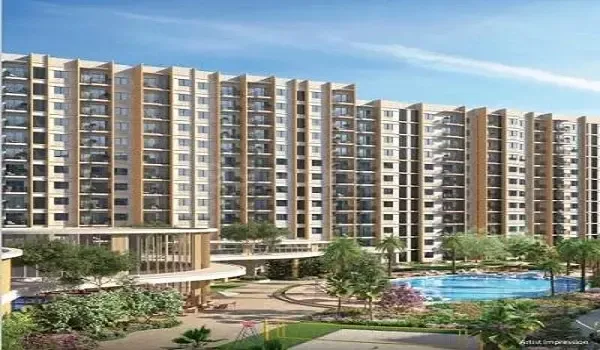
Birla Bannerghatta is a 50-acre gated township by Birla Estates at Begur. On a pre-launch purchase the payment is staggered against construction, which can make the margin easier to plan because it is spread over time rather than due in one go. Work out your margin and the registration costs on the unit you want, keep a contingency buffer, and confirm the loan and payment schedule before you book.
- Builder: Birla Estates (Aditya Birla Group)
- Location: Begur, Begur Hobli, Bannerghatta Road
- Configs: 1, 2, 3, 3.5 BHK + duplex/villa formats
- Starting price: ~₹75 L (indicative; base ~₹12,500 / sq ft)
- Status: Pre-launch · possession early 2031 · K-RERA expected Mar 2027
See the price list and the floor plans to fix the price you are planning for, then size your savings around it.
Frequently Asked Questions
1. How much down payment do I need for a home?
Lenders typically fund about 75 to 90 percent of the value depending on the loan size, so your margin is usually around 10 to 25 percent. On top, you pay stamp duty, registration and, for an under-construction home, GST. Plan for the margin plus these costs, and confirm the exact figures with your lender.
2. Is the down payment the only upfront cost?
No. Beyond the margin you pay stamp duty and registration, GST on an under-construction home, legal and documentation charges, and later interiors and moving. A sensible plan keeps a contingency buffer too, so the upfront cash needed is meaningfully more than the margin alone.
3. Can I pay a larger down payment to reduce the loan?
Yes, and it lowers your EMI and total interest, but do not drain every reserve. Keep your emergency fund and contingency buffer intact. A slightly larger loan you can service comfortably is safer than a small loan that leaves no cushion.
4. How should I save for the down payment?
Set a target and a timeline, then save into a separate goal account. A recurring deposit or a systematic investment plan builds it steadily, and windfalls can be added. Keep it apart from your emergency fund, and take independent advice on the right instrument for your timeline.
5. Can I use a personal loan for the down payment?
Best avoided. A personal loan for the margin carries a high rate and a second EMI, which lenders count against your home-loan eligibility. A documented gift from close family is usually cheaper and cleaner; build the margin from savings where you can.
6. How much EMI can I take on comfortably?
A common guide is to keep all EMIs within about 40 to 50 percent of take-home income, close to how lenders assess you. Leave room for household costs, savings and the running cost of the home. Stretching to the maximum leaves no margin for a rate rise or a surprise expense.
Conclusion
The down payment is not one number, it is the margin the loan leaves you plus the taxes, charges and buffer around it. Work out the margin on the actual price and loan you expect, add stamp duty, registration, any GST and a contingency, and save toward that full figure in a separate account without touching your emergency fund. Keep the EMI comfortable rather than maximal, and fund the margin from savings, investments or a documented family gift rather than costly debt. Plan the whole upfront cost, and the purchase stops being a scramble.
Buying on Bannerghatta Road? Review the price list and the floor plans for Birla Bannerghatta at Begur to fix your target price, then size your savings plan around it.
Birla Bannerghatta Blog